Office material movement is governed by cart dimensions, loading impact, traffic peaks and the building’s available shaft—not by the lift’s appearance or headline capacity. By the end, you can test your loads, compare a goods lift with a glass passenger elevator and prepare a dimensioned specification for a Vadodara installation.
Key takeaways
- Choose a goods lift for repeated cartons, furniture, equipment and trolley movement.
- Calculate total load, trolley size, delivery frequency and peak traffic before ordering.
- Use a dumbwaiter for small items; choose industrial equipment for heavier, harsher use.
- Confirm shaft dimensions, pit, headroom, power supply and approvals before installation.
Which lift suits routine office material movement?
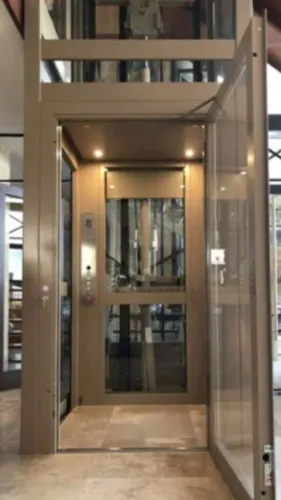
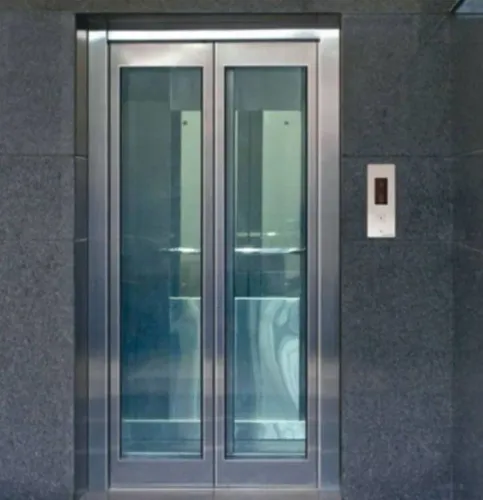
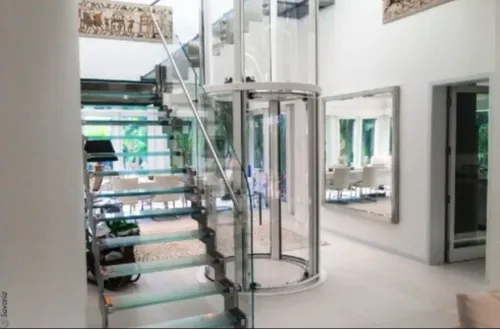
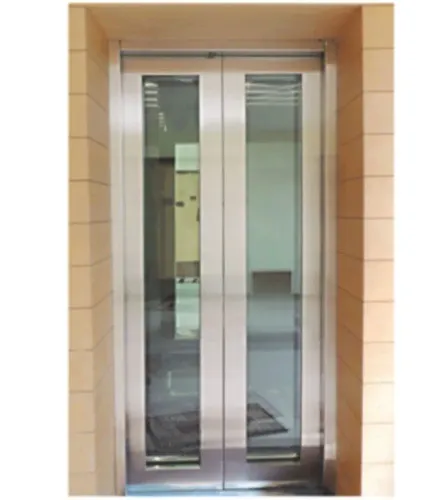
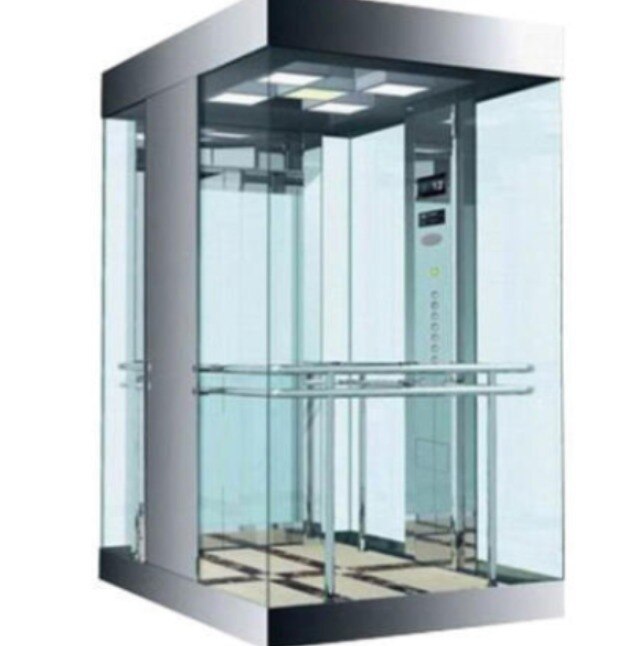
For regular deliveries of files, equipment, cartons and furniture, choose a goods lift, not a decorative passenger elevator. A goods lift is specified for rated load, trolley or pallet dimensions, impact-resistant finishes and repeated loading; a glass elevator is designed for passenger comfort, visibility and architectural appeal.
Glass does not make it suitable for hand trucks or furniture.
| Option | Payload and loading | Traffic, damage and cost |
|---|---|---|
| Goods lift | Handles defined loads through wider doors, with trolley or pallet access | Lower speed and longer door cycles, but fewer handling steps and less impact damage |
| Glass elevator | Carries passengers and light hand-carried items through passenger-sized doors | Better presentation, but glass, finishes and passenger controls are vulnerable to knocks and frequent freight use |
| Passenger-and-goods lift | Carries people and materials only when explicitly designed and approved for both | Suitable when staff must accompany deliveries; duty, doors and protection need separate specification |
A goods lift or glass elevator in Vadodara should be selected against peak trips per hour, loading time, queueing and floor distribution. If deliveries coincide with passenger peaks, a lift with the wrong duty cycle will create queues even when its rated capacity looks adequate.
Choose a glass elevator for commercial building circulation when visibility and visitor experience matter, not as a substitute for routine freight handling. Ask the supplier to state:
- Rated load, clear door opening and usable cabin dimensions
- Permitted passenger use and the applicable approval
- Floor protection, door protection and impact-resistant internal finishes
- Peak trips per hour and expected loading method
How do you calculate the real load and traffic requirement?
Start with the heaviest complete load, not the average box. Usable payload equals the lift’s rated capacity minus the trolley, pallet, cage, packaging and any equipment travelling with the goods. An industrial goods lift for office material movement is unsuitable if its cabin cannot accept the largest cart, even when its kilogram rating looks adequate.
Record these inputs from actual deliveries:
- Maximum combined load and its dimensions
- Trolley or pallet tare weight
- Clear cabin width, depth and door opening
- Turning path from the landing into the cabin
- Floor loading and loading method, including hand pallet trucks
- Floors served and the number of deliveries to each floor
- Loading, unloading and door-waiting time
- Peak trips per hour and required operating hours
Calculate peak traffic separately from daily volume. If 12 deliveries arrive during a two-hour peak, the lift must handle six trips per hour. A complete cycle includes loading, door closing, travel, stops, unloading, door opening and return travel; an eight-minute cycle gives 7.5 theoretical trips per hour, leaving almost no allowance for queues or delays.
Check duty as both cycles per hour and cycles per day. A lift that survives occasional heavy movement may overheat or suffer faster door and brake wear under continuous peaks. If staff must ride with goods, specify a passenger-and-goods or service lift explicitly; do not assume a conventional goods lift permits passengers.
When is an industrial goods lift, commercial lift or dumbwaiter appropriate?
An industrial goods lift for office use fits large trolleys, pallets, furniture and repeated loading impacts. Choose a commercial goods lift for boxed supplies, files and equipment moved by hand trolley at moderate frequency. A dumbwaiter suits small parcels, documents or food between fixed service points—not people, pallets or bulky furniture.
| Option | Material and loading | Staff access and delivery pattern |
|---|---|---|
| Industrial goods lift | Large cabin, wide doors, trolley or pallet loading, robust floor and higher impact tolerance | Goods only unless the approved specification expressly permits riders; suited to warehouses, fit-outs and heavy or frequent deliveries |
| Commercial goods lift | Office carts, cartons, equipment and furniture loaded through a practical landing door | Goods-focused service between floors, with capacity and duty cycle matched to daily office traffic |
| Dumbwaiter | Small trays, parcels, files or meals loaded manually; limited cabin and door dimensions | Goods only, usually unattended, for repeated light deliveries between selected floors |
| Passenger or glass elevator | People and small hand-carried items; architectural finishes are not a freight specification | Passenger peaks and visitor movement; unsuitable for pallets, hand trucks and impact loading |
Check the largest trolley, pallet, diagonal turning path, clear cabin dimensions, door opening and sill gap before selecting any category. A nominal 1,000-kilogram rating is useless if the cart cannot enter.
If staff must routinely ride with material, specify a passenger-and-goods or service lift and obtain that use in the documentation and approval; calling it a goods lift in Vadodara does not grant passenger access.
Match delivery timing too. A slower goods lift can outperform a glass elevator when it removes repacking, lifting and damage, but queueing will grow if deliveries coincide with passenger peaks. Neither category automatically provides evacuation or firefighting service. Those functions require separate fire-safety design and approval.
What building dimensions and approvals must you confirm before ordering?
Before ordering, obtain a dimensioned survey of the existing shaft, pit, overhead and every landing approach. For a goods lift in Vadodara, Krisha engineering or another bidder should provide a GA drawing showing car dimensions, clear door opening, guide-rail reactions, machine arrangement, pit depth, headroom, landing levels and required clearances.
Confirm these items before signing the tender:
- Measure the largest trolley, crate or furniture item, including its turning path inside the car. Weight alone will not reveal a door or corner problem.
- Have a structural engineer verify slab openings, support beams, guide-rail loads, machine loads, pit waterproofing, drainage and seismic or wind effects where applicable.
- Resolve shaft framing, glazing supports, fire stopping, access to concealed equipment and cleaning access before selecting a glass car. A glass finish does not make a passenger lift suitable for impact loading.
- Require the installer to name the current Indian lift-safety standard edition and the authority having jurisdiction at approval and commissioning. In Gujarat, assign responsibility for erection permission, drawing submission, inspection, testing, certificates and operating authorisation.
| Check | Goods lift | Glass elevator |
|---|---|---|
| Car and door | Sized for trolley, pallet and impact clearance | Passenger proportions; verify every load route |
| Shaft and structure | Reactions, pit and headroom follow equipment schedule | Add glazing frames, supports and fire stopping |
| Fire and approval | Separate fire-rated doors, emergency power and controls if required | Same building and fire approvals; glass does not grant fire-lift status |
The phrase goods lift or glass elevator in Vadodara should never replace these measured, documented decisions.
Related products
 | Commercial Lift 1 to 5 tone industrial goods lift A WAREHOUSE CARGO LIFT is made available by us that is designed to offer simplest, labor save, most economical and... View product → |
 | Dumbwaiter Elevator Goods lifts are specially designed lifts that enable efficient transportation of goods and materials between different floors in buildings or... View product → |
How should you compare damage risk, operating cost and daily performance?
A low purchase price does not prove value. Compare the lift over its full working life: damage from trolleys, cleaning time, spare-part availability, preventive-maintenance visits, breakdown response, rescue arrangements and statutory inspection support.
For a goods lift or glass elevator in Vadodara, make the contract assign responsibility for erection permission, testing, inspection, operating authorisation and certificate submissions.
| Option | Damage and upkeep | Daily performance | Cost questions |
|---|---|---|---|
| Goods lift | Protected floor, wall guards, bumper rails and trolley-rated doors resist impact | Longer door cycles may be offset by fewer handling steps | Price parts, warranty exclusions, service visits and local response time |
| Glass elevator | Fingerprints, scratches and impact make panels and doors more demanding to maintain | Passenger peaks can create queues for material deliveries | Include cleaning, glazing protection and replacement access |
| Passenger lift | Finishes and door edges are vulnerable to carts and concentrated loads | Better passenger comfort, but unsuitable loading can slow service | Check warranty exclusions and damage claims before using it for freight |
A glass elevator for commercial building projects remains practical only when its architectural benefit justifies cleaning and repair exposure. Specify laminated or safety-rated glazing, framed protection and a documented replacement method; decorative glass alone is not a freight specification.
Model peak trips per hour, loading time, unloading time, floor distribution and passenger-peak overlap. Then confirm the tender cites the Indian lift-safety standard edition and Gujarat approval requirements in force at commissioning, not an old quotation template. A cheaper lift that queues, damages finishes or waits for unavailable parts is not cheaper in operation.
Frequently asked questions
Which lift suits routine office material movement?
Choose a goods lift when you regularly move files, cartons, equipment, furniture or trolleys. A glass elevator suits passenger travel, visibility and architectural presentation rather than repeated material handling.
How do you calculate the real load and traffic requirement?
Add the heaviest load, trolley or pallet weight, and handling equipment weight. Then record load dimensions, deliveries per hour, peak periods, travel distance and the number of floors served.
When is an industrial goods lift, commercial lift or dumbwaiter appropriate?
Use an industrial goods lift for heavy, frequent or impact-prone movement. Use a commercial goods lift for routine office and retail loads. Choose a dumbwaiter for small items moved between floors without people or trolleys.
What building dimensions and approvals must you confirm before ordering?
Confirm shaft width and depth, door opening, pit depth, headroom, floor-to-floor height, structural load capacity, machine-room needs, power supply, fire access and local inspection or licensing requirements.
Related products
 | Dumbwaiter Elevator Krisha Engineering Dumbwaiter Elevator We are the largest supplier of Dumbwaiter Elevator are small freight elevators (or lifts) intended to carry objects rather than people. View product → |
 | Goods Lift Industrial Heavy-duty Goods Lift Industrial Goods Lift is an elevator designed uniquely to lift heavy goods, material, or equipment between various levels of industrial plants,... View product → |
 | Commercial Lift Krisha Engineering Commercial Goods Lift Commercial Goods Lifts The offered Commercial Goods Lifts is made available by us that is a machine to lift goods vertically in a safe way. View product → |
 | Goods Lift A Krisha Engineering Goods Lift, otherwise called a cargo lift or freight lift, is a particular kind of lift intended to ship weighty merchandise and... View product → |
Keywords