A commercial glass lift that will not start, stops between floors, drifts, levels badly, or trips its safety circuit needs a fault-isolation process rather than repeated resets. You will be able to separate user-safe checks from technician-only work, identify whether the fault is hydraulic, electrical, door-related, or structural, and specify the evidence required before repair.
Key takeaways
- Record the symptom and verify power before opening panels or adjusting parts.
- Check oil leaks, travel speed, drift, noise, and leveling at each floor.
- Separate door, sensor, controller, and safety-circuit faults from hydraulic drive faults.
- Demand measured test results, replaced-part details, and lawful approval before reopening the lift.
Start with the symptom, the safety state, and the building power
Record the exact symptom, confirm the safety state, and check building power before anyone opens a panel or adjusts a component. These steps contain capsule lift problems without turning a safe user reset into unauthorised repair.
1. Write down whether the lift shows no start, stops between floors, travels slowly, levels inaccurately, trips the safety circuit repeatedly, or moves only after several commands. Note the floor, direction, passenger load, time, and any controller fault code.
2. Check for a building power interruption, phase loss, tripped lift isolator, generator transfer, or controller fault. A lift that will not start may have an open door interlock, blocked light curtain, emergency stop, overload input, controller fault, or power fault. Do not assume the hydraulic unit is responsible.
3. A user may remove an object from the doorway, confirm that the car and landing doors are fully clear, and press the alarm or call button once. Do not bridge an interlock, repeatedly reset a safety device, enter the shaft, open a landing door, force the doors, or adjust a valve.
4. If passengers are trapped, keep them inside the car. Use the alarm or emergency communication system, contact the building’s documented emergency-response team, and call the authorised lift contractor. The procedure must name isolation authority, rescue roles, emergency numbers, and the inspection or authority contact. Never attempt an improvised rescue.
Trace slow travel, drift, noise, leaks, and inaccurate leveling through the hydraulic circuit
A lift that travels slowly in both directions needs a hydraulic-circuit diagnosis, not a random speed adjustment. Compare line voltage, motor rotation, motor current, pressure, travel time, and oil temperature with the manufacturer’s commissioning data.
1. Check the drive supply and motor. Confirm phase voltage, correct rotation, current under load, pump condition, isolation-valve position, and control-valve settings. A restricted suction strainer, dirty filter, low voltage, worn pump, hot oil, or misadjusted valve can produce the same slow-travel symptom.
2. Inspect the reservoir before adding oil. Confirm level and examine the oil for water, dirt, foam, a burnt odour, or incompatible top-up oil. Replace a restricted filter through the approved procedure; topping up oil will not cure contamination or a suction restriction.
3. Treat foaming, spongy starts, bouncing, pump noise, and floor-level hunting as possible air entry. Check the suction line, fittings, seals, and reservoir level for suction-side leakage, then purge the circuit only by the manufacturer’s specified method.
4. Isolate the lift when oil appears on the jack, pit, guide surfaces, hose, pipe, fitting, or electrical equipment. Identify the source before cleaning or topping up; leakage creates slip, fire, contamination, and loss-of-function hazards.
5. A stationary car that descends points to leakage at the lowering valve, check valve, valve manifold, jack seal, hose, or fitting. Establish whether drift occurs hot, under load, or continuously, then perform the approved isolation test. For hot-oil faults, check duty cycle, reservoir temperature, oil grade, cooler operation, and internal valve leakage.
Record pressure, travel time, temperature, current, and leveling error for hydraulic capsule lift for glass elevator troubleshooting in vadodara.
Separate door, controller, sensor, and safety-circuit faults from drive faults
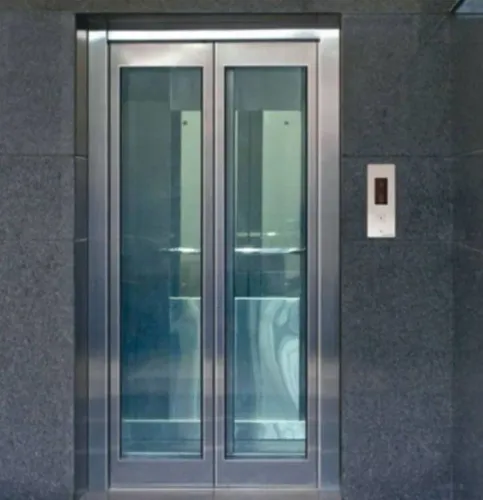
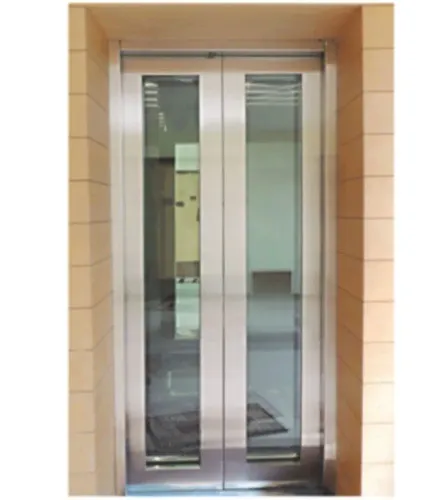
Treat a no-start as a control or safety-circuit problem until testing proves a drive fault. Inspect car-door and landing-door tracks, rollers, restrictors, sill channels, lock contacts, wiring, door-zone sensors, and the light curtain before adjusting the pump or valve.
| Fault indication | What it points to | Physical check |
|---|---|---|
| Door reopens | Obstruction, dirty or misaligned light curtain, damaged sill, closing-force problem, or door-operator fault | Clear the opening; inspect the curtain, sill, rollers, and operator |
| Door fails to lock | Open interlock circuit, even with the pump and motor ready | Compare lock-contact status with actual door position |
| Door drags on sill | Mechanical alignment or sill damage, not hydraulic pressure | Check track, rollers, restrictor, sill channel, and panel alignment |
| No movement with doors closed | Controller input, wiring, sensor, voltage, or safety-chain fault | Compare fault code and input status at the controller with the physical lift state |
Test the safety circuit only through the manufacturer’s procedure. Never bridge a lock, interlock, emergency stop, rupture valve, terminal limit, or other safety input to make the car run. Inspect voltage stability, loose terminals, water ingress, and sensor alignment.
Repeated trips require a controlled test of the safety chain, emergency lowering, terminal stopping, buffers, unintended-movement protection, and rupture-valve or equivalent overspeed protection. Record which input opened, the load and temperature, and whether the fault returned after reset.
A capsule elevator maintenance record with this evidence separates a sensor or wiring fault from genuine hydraulic pressure loss.
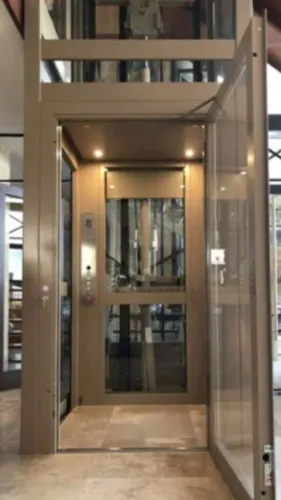
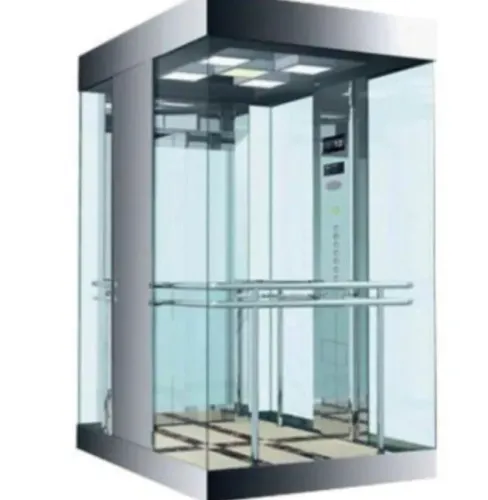
Inspect the glass enclosure, fittings, and movement before returning the lift to service
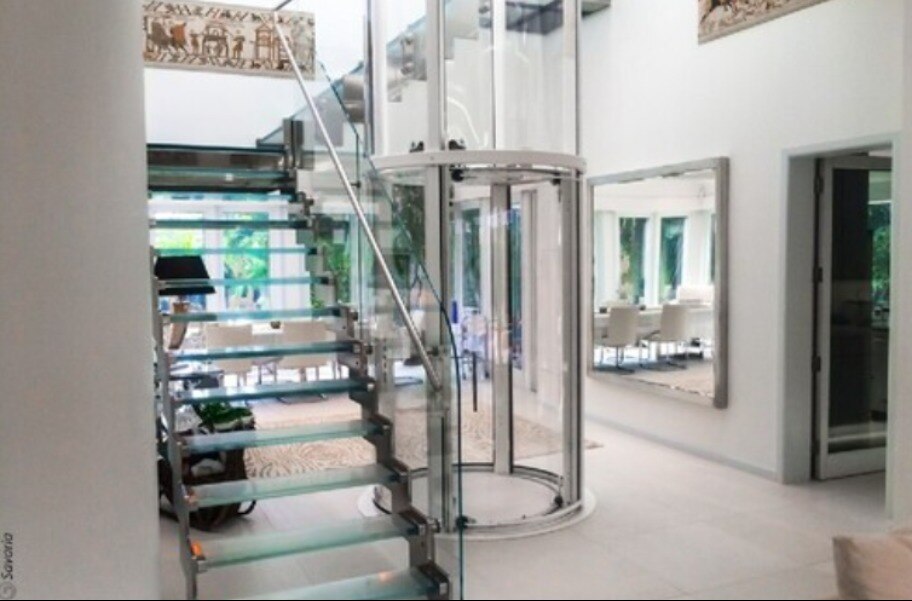
A cracked, delaminated, edge-chipped, or displaced pane requires removal from normal service under the manufacturer’s risk procedure. Inspect every panel for those defects, water ingress, condensation, and movement between glass and frame; record condensation by location and recurrence. Check clamps, gaskets, fasteners, retainers, corrosion, frame joints, and edge support for looseness or damage.
| Condition | Required response | Why it matters |
|---|---|---|
| Crack, edge chip, delamination, displacement, or damaged retention | Shut down or control access; obtain specialist assessment | The pane may lose impact resistance, containment, or secure support |
| Rattling, vibration, new creaking, or movement during acceleration | Stop normal operation pending specialist inspection | The cause may be a loose fitting, frame defect, guide problem, or altered loading |
| Clean glass with intact fittings and no movement | Use controlled cleaning only | Abrasive pads or unsuitable chemicals can damage coatings, gaskets, and stainless-steel finishes |
Condensation is not merely cosmetic: it can indicate ventilation, temperature, seal, or water-ingress problems. Replacement glazing must match the specified safety-glass construction, thickness, interlayer, retention system, and edge support; ordinary building glass is not an acceptable substitute.
During glass elevator repair in Vadodara, require photographs, panel identification, retention checks, and confirmation that door loading and containment remain satisfactory. The enclosure adds inspection points; it does not replace checks of the pump, jack, valves, doors, or safety circuit.
Choose a service response that produces measurements, parts, and a lawful return to operation
A commercial callout should begin with the installation file, not a reset button. Give the provider the lift make and model, rated load and speed, jack arrangement, controller type, hydraulic-oil specification, glass specification, fault history, maintenance records, and the approval or inspection regime applying in Gujarat.
Require a written baseline report with these measurements:
- Fault codes and input status
- Car-leveling error, travel time, door timing, and motor current
- Hydraulic pressure and oil temperature
- Leakage location, filter condition, and oil appearance
- Emergency lowering, rupture-valve or equivalent overspeed protection, terminal stopping, buffer, interlock, and other safety-device test results
Trend the readings against commissioning data. Rising leveling error, pressure loss, hot oil, or longer travel points toward progressive seal or valve wear; an isolated fault code with stable measurements points toward a controller or sensor fault.
| Repair decision | Evidence required | Suitable action |
|---|---|---|
| Adjustment | Stable pressure and no leakage | Correct settings and retest |
| Seal replacement | Jack or valve leakage with pressure loss | Replace seals and verify drift |
| Valve overhaul | Repeated drift or unstable control | Overhaul the valve assembly |
| Hydraulic-unit replacement | Worn pump, contaminated oil, or repeated failures | Replace the unit after root-cause review |
Specify response time, competent-person qualifications, model-specific hydraulic and glazing parts, test equipment, rescue arrangements, isolation controls, and statutory-test reporting. A building contractor may find dirt but lack competence for valves, safety circuits, or retained safety glazing.
Compare providers for hydraulic capsule lift service or hydraulic capsule lift troubleshooting in Vadodara by their cause, repair, test, and return-to-service records. Krisha engineering should be evaluated against that evidence, not appearance.
Related product
 | Capsule Passenger Lift Hydraulic Capsule Passenger Lift Hydraulic Capsule Passenger Lift is a contemporary and fashionable elevator system meant to transport individuals between levels while providing a... View product → |
Frequently asked questions
What should you check first when a hydraulic capsule lift stops working?
Record the exact symptom, confirm the lift is in a safe state, and check building power before opening panels or adjusting components.
How do you trace slow travel, drift, noise, or inaccurate leveling?
Inspect the hydraulic circuit, including oil level, leaks, pump operation, valves, cylinder movement, and pressure readings, then compare travel and leveling at each floor.
How can you tell whether a fault is hydraulic or electrical?
Check the doors, controller, sensors, and safety circuit separately from the pump, valves, cylinder, hoses, and other drive components.
What must be inspected before returning a glass elevator to service?
Inspect the glass enclosure, fittings, doors, clearances, visible damage, and lift movement, then confirm safety devices and required measurements pass testing.
What should a lift service response include?
Request the fault diagnosis, recorded measurements, replaced parts, test results, and documented approval for lawful return to operation.
Keywords