The right solution depends on more than whether the building has stairs: user mobility, wheelchair dimensions, storey count, stair geometry, traffic and available construction space all change the answer. By comparing those factors with installation disruption, operating needs, approvals and maintenance, you can identify which option fits the site before requesting quotations.
Key takeaways
- Choose a stair lift for one user and one short staircase.
- Measure stair width, landing space, slope and obstruction clearances.
- Specify a lift with a wheelchair-sized cabin, level entry and accessible controls.
- Confirm approvals, backup power, rescue procedures and maintenance coverage before installation.
Which option fits the building’s users and daily traffic?
Choose a stair lift when one user needs to bypass one short internal staircase; choose a glass elevator when several people must travel between floors independently. For a stair lift or glass elevator in Vadodara, begin with a measured survey, not a product photograph.
| Option | Best fit | Main limitation |
|---|---|---|
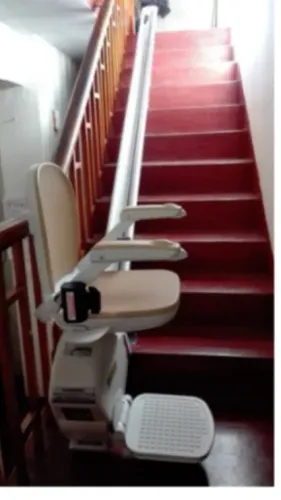
| Stair lift | One short flight, low traffic, no practical shaft, pit or headroom space, and a user who can transfer onto the seat | It serves one stair flight at a time, restricts two-way traffic, and is unsuitable for wheelchair users who cannot transfer |
| Glass elevator | Multiple storeys, wheelchair users, visitors, staff, frequent traffic, or a public or commercial building | It needs space, structural support, electrical work, approvals, and a planned emergency-rescue system |
A stair lift becomes the wrong choice when users need direct access to several floors, frequent two-way movement, or a wheelchair platform rather than a seat. Separate lifts on separate flights also create transfer points and do not provide an accessible means of escape during fire or smoke.
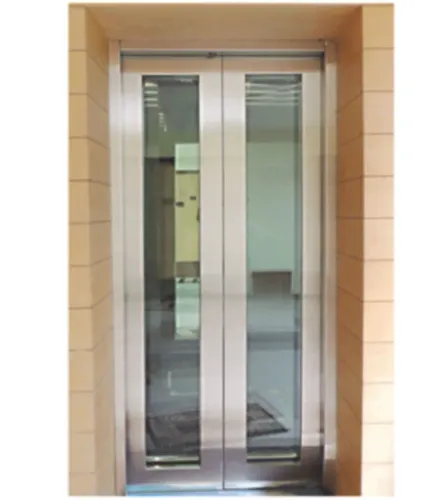
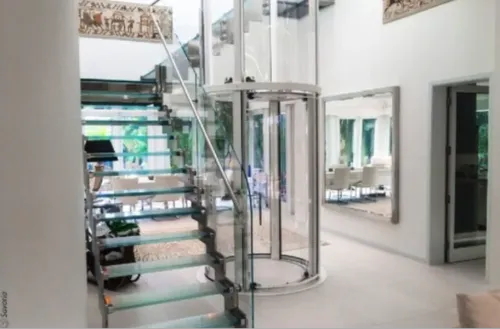
Treat a glass elevator for accessibility as an engineered access route, not a transparent cabin. Confirm the measured stair width and pitch, landings, floor-to-floor heights, shaft, pit, headroom, support points, power supply, drainage and wheelchair turning areas against the manufacturer’s drawings and current authority requirements.
A car near 1,100 mm by 1,400 mm with a 900 mm clear door is a common Indian benchmark, but verify the project standard before approval.
What must you measure before specifying a stair lift?
A measured survey determines whether a stair lift will fit the staircase and serve its intended passenger safely. Do not rely on a few overall dimensions or a supplier’s standard drawing.
1. Record the stair’s clear width, pitch, number of steps, straight or curved layout, and every obstruction, including handrails, doors, radiators and low ceilings. Measure each landing, including the space available for safe boarding and leaving.
2. Check the proposed rail’s fixing points against the stair structure. Weak or damaged treads, unsuitable walls and narrow edge margins can prevent secure anchorage. Photograph the staircase and mark support locations on the survey.
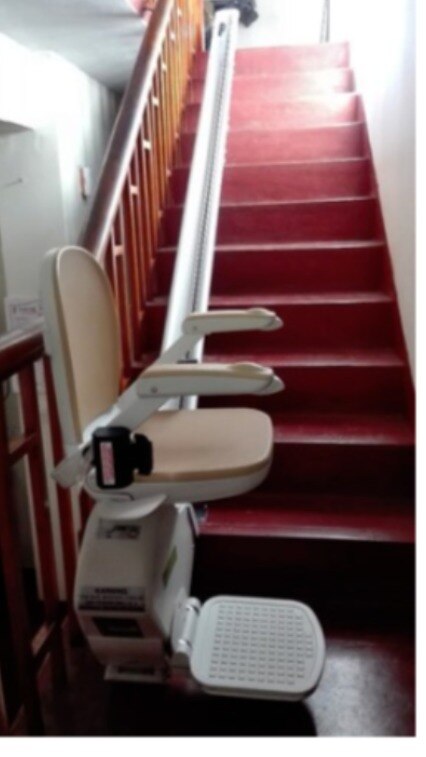
3. Measure the upper and lower approach zones, not just the steps. A platform model needs room for a wheelchair to approach, turn, align and depart without blocking a doorway or landing. A seated model needs enough space for the passenger to transfer from a wheelchair.
4. Assess the user’s weight, balance, transfer ability, walking distance, wheelchair dimensions and need for an attendant. Choose a seated or platform stair lift from this assessment, not from price alone; a seated unit fails if the passenger cannot transfer safely.
5. Confirm travel between every required floor. Separate flights need separate installations and safe transfer areas between them, so a stair lift in Vadodara may not provide independent access throughout a multi-storey building.
Finally, document the electrical supply, charging location and emergency controls. Use the completed survey to check manufacturer drawings and the lift-approval or inspection requirements before ordering.
What makes a glass elevator genuinely wheelchair accessible?
A glass car is genuinely wheelchair accessible only when its internal dimensions, door opening, approach route and controls meet the project’s accessibility brief.
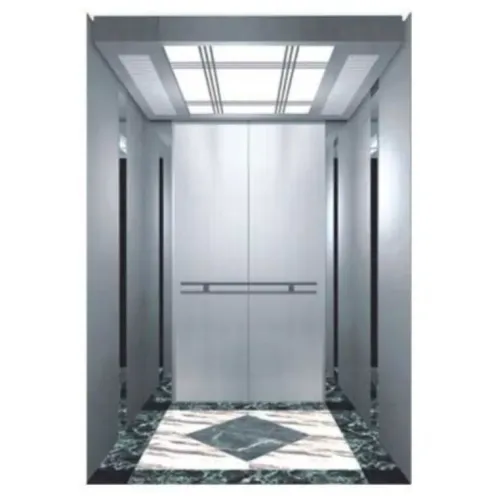
For a glass elevator for accessibility, verify a car of approximately 1,100 mm × 1,400 mm and a clear door opening of about 900 mm against current authority requirements; never infer them from the external glass enclosure.
Obtain a measured survey before approving the design. Ask for these items on the drawing:
- Floor-to-floor heights, stair and landing dimensions, shaft size, pit depth and headroom
- Structural support points, drainage, electrical supply and the wheelchair turning area at every landing
- Level stopping, a wheelchair-compatible door, reachable controls, tactile or raised markings, audible floor announcements and visual contrast
- Emergency lighting, alarm, two-way communication and a documented rescue procedure for power failure
A domestic inverter connected to the building supply is not a complete lift-rescue system. A transparent car can aid wayfinding, but glare, reflections and visual confusion can make controls or edges harder to see.
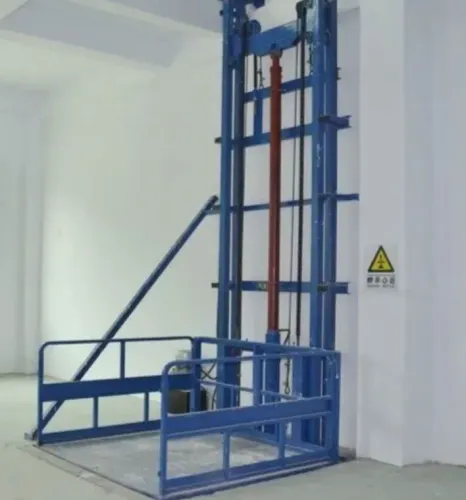
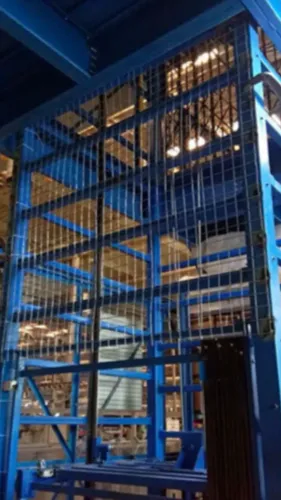
Check the specification against the intended use before accepting a goods or material-handling lift. A larger platform does not make it suitable for passengers; guarding, doors, speed and controls can differ.
| Check | Confirm | Failure if assumed |
|---|---|---|
| Car and door | 1,100 × 1,400 mm; 900 mm clear opening | A wheelchair cannot enter or turn |
| Approach | Level landing and turning space | The lift is accessible only on paper |
| Controls | Reachable, tactile, audible and contrasting | Users cannot operate or identify it |
| Emergency plan | Battery, alarm, communication and rescue | Occupants remain stranded during an outage |
How do cost, construction disruption and approvals change the decision?
A stair lift or glass elevator in Vadodara should be selected against total installed cost, not equipment price. Krisha engineering can help interpret manufacturer drawings, but your measured survey and approval path remain the buyer’s evidence. Compare these items before accepting a quotation.
| Option | Project cost | Construction disruption and approvals |
|---|---|---|
| Stair lift | Rail, carriage, seat or platform, batteries, controls, installation and future battery replacement. | Usually limited to stair fixing points and an electrical connection, but narrow stairs, weak treads or complex landings can add work. Obtain installation drawings and confirm inspection requirements. |
| Glass elevator | Car, drive system, shaft, doors, pit, headroom, structural support, drainage, finishes and electrical works. A wheelchair car of about 1,100 mm × 1,400 mm with a 900 mm clear door needs verification. | Expect structural openings, shaft and pit construction, waterproofing, landing works and longer disruption. Check current state lift approval and inspection requirements before construction. |
| Both | Include power-failure equipment, testing, annual service access and civil reinstatement. | A stair lift is not an accessible escape route during fire or smoke. A glass elevator needs emergency lighting, alarm, communication and a rescue arrangement; a domestic inverter is not enough. |
Require these records in the quotation file:
- A measured survey showing floor-to-floor heights, stair pitch and width, landings, shaft dimensions, pit, headroom, support points and wheelchair turning areas.
- An electrical and drainage plan covering battery-backed travel, rescue procedures, monsoon water ingress, dust, corrosion and roof heat.
- Manufacturer drawings matched to the authority’s approval documents and inspection route.
Related product
 | Stair Lift Krisha Engineering Stairs Lift Stair Lift Find a newly discovered feeling of freedom and versatility in your own home with our Stair Lift, a progressive arrangement intended to... View product → |
What maintenance and emergency arrangements will the system need?
Put the maintenance schedule, response time and rescue responsibilities in the purchase contract. Specify stair lift maintenance in vadodara with inspection records, fault reporting and replacement intervals for batteries, belts and drive parts; do not accept a service promise without named contact details.
Require these arrangements before handover:
- Inspect rail fasteners, carriage safety sensors, seat or platform interlocks, belts or drive components, charging contacts, emergency-stop controls, and upper and lower limit devices. Test the battery under load; an illuminated charger indicator proves nothing about usable capacity.
- Require battery-backed stair-lift travel, plus a controlled return or emergency-disembarkation procedure. For a glass elevator, specify emergency lighting, alarm, two-way communication, backup supply and a written rescue procedure. A domestic inverter connected to the building supply is not a complete lift-rescue system.
- Fit operating controls that prevent unauthorised use, including keyed controls where appropriate, functioning door and platform interlocks, clear emergency-stop access, landing controls and passenger alarm instructions. Only trained, authorised personnel should release a trapped elevator passenger.
- Record every inspection, fault, battery test and rescue drill, with a defined escalation time for a public building.
For a glass elevator in Vadodara, include pit drainage and water-ingress checks before each monsoon, and inspect roof heat, dust, corrosion and solar exposure around controls and finishes. Keep the measured survey, manufacturer’s drawings and state inspection or approval documents together; the emergency plan must match the installed equipment, supply and access route.
Frequently asked questions
Which option suits a building’s users and daily traffic?
Choose a stair lift when one user needs to bypass one short internal staircase. Choose a glass elevator when several people need independent travel between floors, including wheelchair users or visitors carrying goods.
What must you measure before specifying a stair lift?
Measure the staircase width, total rise, landing dimensions, tread depth, headroom, turning space and any doors or obstructions along the rail path. Record whether the stairs are straight, curved or split into multiple flights.
What makes a glass elevator genuinely wheelchair accessible?
Specify a cabin large enough for the wheelchair and attendant, level entry at each floor, adequate door width, reachable controls, handrails, emergency communication and enough landing space to turn and exit safely.
How do cost, disruption and approvals affect the decision?
A stair lift usually needs less structural work, while a glass elevator needs a shaft or supporting structure, power, floor openings and installation coordination. Check the building permissions, electrical requirements, fire-safety impact and local inspection obligations before selecting either system.
What maintenance and emergency arrangements are needed?
Set a written maintenance schedule, keep the model and serial number accessible, test safety devices and backup systems, and provide a staffed rescue procedure. For stair lift maintenance in Vadodara, confirm response times, spare-parts availability and service coverage before signing.
Keywords