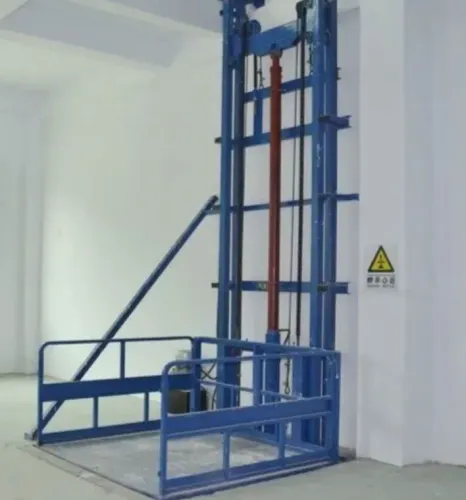
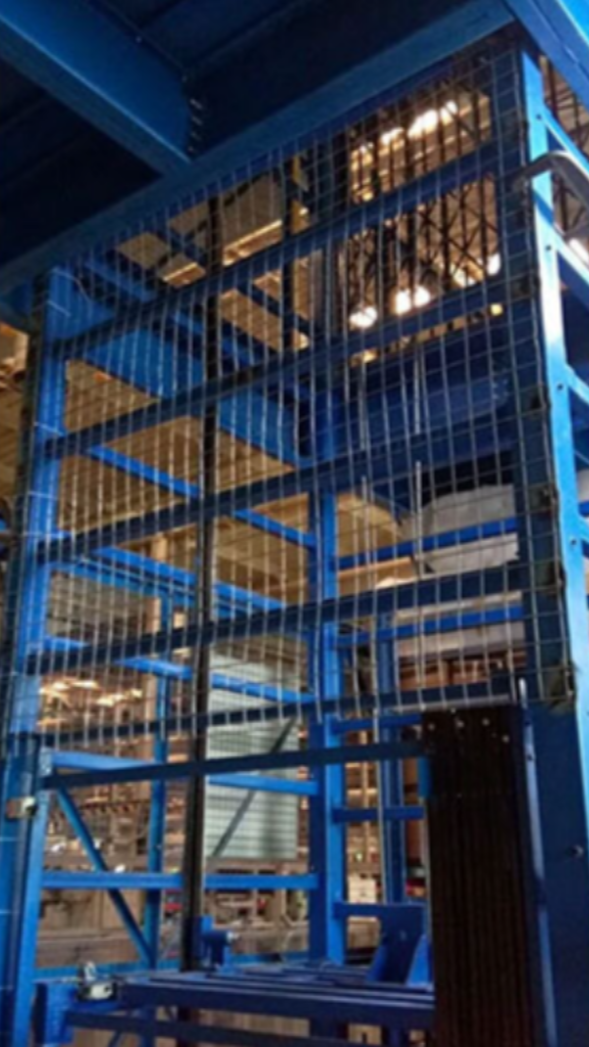
An Industrial Goods Lift can remove a major material handling bottleneck when it is correctly matched to the facility. When specifications are based on incomplete information, however, the lift itself can become a new operational constraint.
Factories, workshops, processing units, and industrial facilities in Vadodara can avoid many problems by identifying common selection mistakes before equipment dimensions and capacities are finalized.
Mistake 1 Choosing Capacity From Average Loads
Average load weight is useful, but it should not be the only figure considered.
Suppose most movements involve 500 kg of material while a heavier production component must occasionally travel between floors. A lift selected only around normal loads may be unable to support that occasional but essential task.
Document typical, peak, and foreseeable future loads.
The selected rated capacity should be based on properly assessed operational requirements rather than guesswork.
Mistake 2 Ignoring Load Dimensions
Weight and dimensions are separate considerations.
A relatively lightweight component may be too long or wide for a small platform. Likewise, a trolley may fit inside the lift but struggle to pass through the entrance.
Measure the complete loaded handling equipment rather than the goods alone.
Mistake 3 Forgetting the Approach Route
The material must reach the lift before it can travel vertically.
Narrow aisles, sharp turns, uneven floors, insufficient staging space, or congested entrances can reduce efficiency.
Review the entire route from production or storage to the lift landing and then from the destination landing to the next process.
Mistake 4 Underestimating Movement Frequency
A goods lift that works occasionally has different duty requirements from one integrated into a continuous production process.
Estimate movements during the busiest shift.
If production is expected to increase, discuss future movement volumes as well. Industrial equipment is generally expected to remain in service far longer than the production plan used during initial construction.
Mistake 5 Treating Goods and Passenger Movement as Interchangeable
Material lifting equipment should be selected for its intended purpose.
Businesses should clearly explain whether the lift will transport goods only or whether an application requires personnel movement. This distinction influences design and safety requirements.
Workers should also understand permitted use after installation.
Mistake 6 Finalizing the Building Before the Lift
When architects or contractors complete the shaft and surrounding structure before confirming lift requirements, available choices can become restricted.
Pit depth, shaft dimensions, headroom, landing openings, structural provisions, and electrical arrangements should ideally be coordinated before construction reaches an advanced stage.
This is particularly useful for new factories and warehouse developments around Gujarat's industrial centres.
Mistake 7 Ignoring Maintenance Accessibility
Maintenance teams need safe and practical access to relevant equipment.
If service accessibility is overlooked during planning, routine inspection can become unnecessarily complicated.
Buyers should ask how the system will be inspected, which areas require access, and what preventive maintenance is expected.
Mistake 8 Selecting Only on Initial Price
Comparing quotations purely by purchase price can hide important differences.
Capacity, platform dimensions, door configuration, safety arrangements, controls, material specifications, installation scope, and service provisions should be compared on a like-for-like basis.
Krisha Engineering works with industrial lifting requirements in Vadodara, where the correct configuration often depends on understanding the customer's material flow as closely as the available building space.
A well-selected industrial goods lift should shorten material routes, support predictable movement, and fit naturally into the production process.
Before ordering, businesses should therefore validate the actual load, dimensions, frequency, access route, site conditions, safety needs, and future operating requirements. Those checks can prevent a seemingly small specification decision from becoming a daily production problem.
Keywords