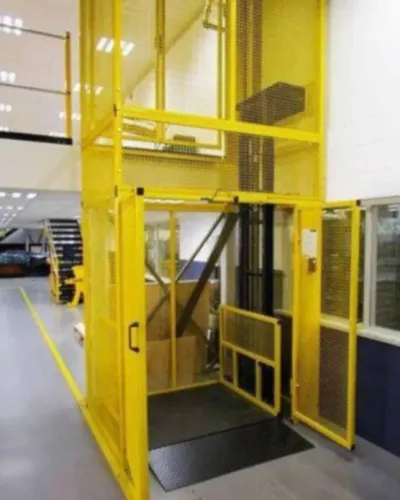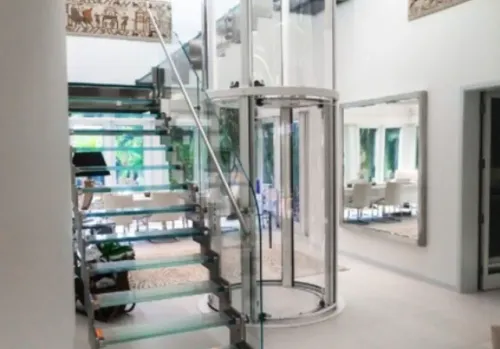


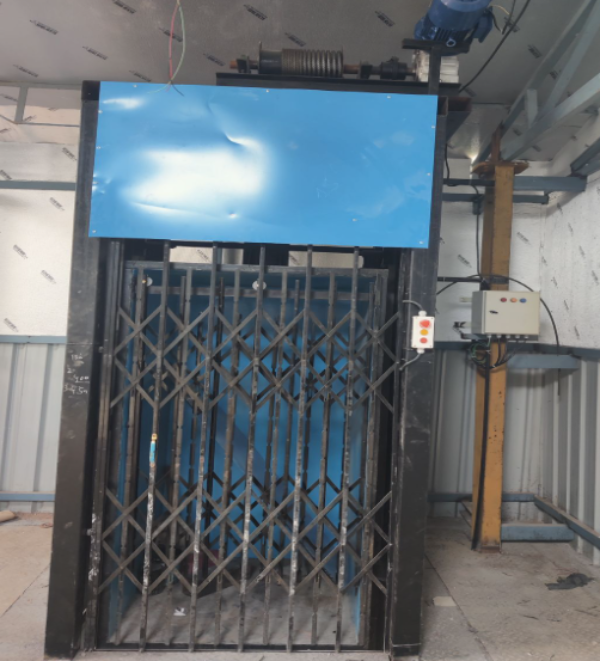
An Industrial Goods Lift often becomes an important part of a factory's internal logistics. Raw materials may need to reach an upper production level, components may move between processes, or finished products may need transportation to storage and dispatch areas.
Because the equipment can influence daily workflow, selecting a manufacturer should involve a technical assessment rather than a simple price comparison.
Look for Requirement-Based Recommendations
A capable provider should first understand the application.
Expect questions about:
- Maximum load
- Material dimensions
- Number of floors
- Vertical travel
- Operating frequency
- Loading method
- Entrance arrangement
- Available installation space
- Site conditions
If a recommendation is provided without understanding these basics, it may be difficult to determine whether the proposed equipment genuinely matches the factory.
Provide Accurate Load Information
Industrial loads can differ significantly from ordinary commercial goods.
Machine components, dies, fabricated assemblies, raw materials, drums, packed products, and trolleys can have concentrated or unusually shaped loads.
Explain both weight and dimensions clearly.
The manufacturer needs to understand how materials will be positioned and moved into the lift, not merely their nominal weight.
Request a Site Assessment
For existing factories, physical site conditions can affect equipment selection considerably.
Columns, floor openings, beams, production machinery, utility lines, access routes, and existing civil structures should be considered.
A site assessment can also help establish landing positions and identify modifications that may be necessary before installation.
Examine the Technical Proposal
A professional quotation should provide enough information to understand what is being offered.
Review details such as capacity, platform or cabin dimensions, number of stops, travel, door arrangement, drive configuration, controls, power requirements, installation scope, and relevant civil requirements.
Ask questions wherever specifications are unclear.
Clarify Responsibility Between Contractors
Industrial projects often involve several parties.
The elevator manufacturer, civil contractor, structural consultant, electrical contractor, architect, and factory engineering team may each have specific responsibilities.
Establish these boundaries early.
Unclear responsibility for shaft preparation, structural supports, electrical supply, openings, finishing, or related work can cause avoidable project delays.
Assess Safety Knowledge
The provider should clearly explain the intended operation of the Industrial Goods Lift and relevant safety provisions.
Factory teams should understand rated capacity, loading practices, door operation, controls, emergency procedures, and maintenance requirements.
Safety instructions also need to reach the employees who will actually use the equipment.
Evaluate Maintenance Support
A lift that supports a production process needs an appropriate maintenance plan.
Ask potential manufacturers about preventive servicing, inspection schedules, service response arrangements, component support, and parts availability.
Maintenance accessibility should also be considered during installation planning so that future service work can be carried out appropriately.
Compare Lifecycle Value
Initial cost matters, but it should not be the only purchasing criterion.
Consider whether the equipment is properly sized, whether the proposed configuration supports workflow, what maintenance will involve, and whether the provider can support the system after commissioning.
A slightly different initial investment can make sense when it better matches operational requirements and reduces workflow limitations.
Consider Local Project Coordination
For factories in Vadodara, Gujarat, working with a provider familiar with industrial project coordination can simplify discussions involving site measurements and installation requirements.
Krisha Engineering manufactures elevator and lift solutions for different building and material-handling applications. For an industrial enquiry, the discussion should begin with the factory's actual operating conditions rather than a predetermined model.
Prepare Before Requesting the Final Proposal
A factory is ready for a detailed Industrial Goods Lift proposal when decision-makers can provide reasonably accurate information about load, dimensions, number of levels, travel, usage frequency, installation location, electrical availability, and project schedule.
Photographs, drawings, or site measurements can provide additional context where appropriate.
The goal is not simply to install equipment capable of moving vertically. It is to create a material-handling link that fits naturally into factory operations.
Choosing an Industrial Goods Lift manufacturer on the basis of technical understanding, installation planning, service capability, and long-term suitability gives industrial businesses in Vadodara a stronger foundation for a dependable material movement system.