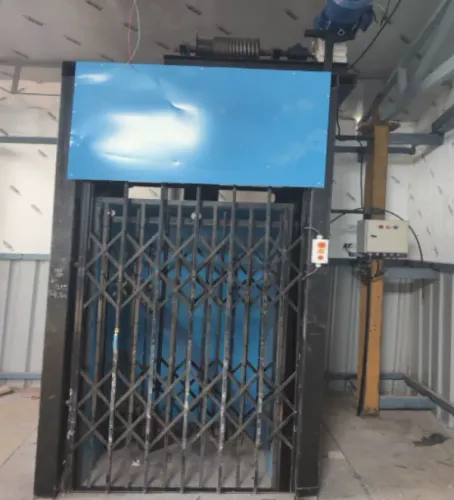


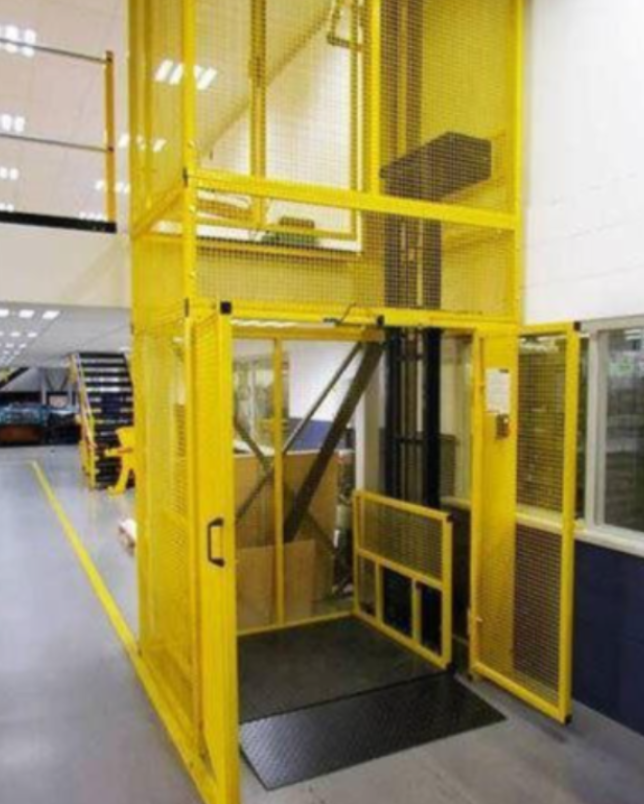
Warehouse productivity depends on movement. Goods arrive, enter storage, move between operational zones, and eventually leave for distribution. In a multi-level facility, inefficient vertical movement can slow this entire sequence.
A Warehouse Cargo Lift can provide dedicated movement between floors, but its specification needs to reflect the warehouse's real load profile rather than a generic capacity figure.
Document Your Maximum Load
Start by identifying the heaviest normal load the lift will carry.
Do not calculate only the weight of the goods. If materials travel on a trolley or another loading device that enters the lift, its weight may also need consideration when establishing the complete load.
Provide accurate information to the manufacturer rather than estimates designed to reduce the quoted capacity.
Measure the Largest Load
Next, measure physical dimensions.
Record:
- Maximum load width
- Maximum load height
- Maximum load depth
- Trolley dimensions
- Required entrance clearance
This step prevents the frustrating situation where a lift has sufficient weight capacity but cannot accommodate a frequently transported item conveniently.
Map Material Flow
Draw the route goods take through the warehouse.
Where do they arrive? Where are they stored? Which floors require regular transfer? Where will staff position loads before entering the lift?
The Warehouse Cargo Lift should support this workflow rather than create unnecessary detours.
Entrance positions may also be influenced by how goods need to enter and leave at different levels.
Estimate Operating Frequency
A warehouse making ten lift trips per day has a different duty requirement from one making repeated trips throughout every shift.
Estimate normal and peak operating frequency as accurately as possible.
Discuss shift duration, daily cycles, peak dispatch periods, and whether the lift supports a critical operational process.
Check the Proposed Installation Space
Existing warehouses often contain structural columns, racks, equipment, loading areas, utility services, and vehicle routes.
A provider should assess the proposed location carefully.
For new facilities, incorporating lift requirements into architectural and structural drawings early usually provides greater flexibility.
Confirm Electrical Requirements
Ask what electrical supply and associated provisions will be needed before installation.
The facility's electrical team can then prepare the site appropriately and coordinate work with other contractors.
Leaving these requirements unresolved until equipment arrives can delay commissioning.
Review Safety Provisions
Warehouse operators should understand how the lift is intended to be used.
Ask the provider to explain loading limits, entrance operation, controls, safety features, emergency procedures, and prohibited uses.
Operating instructions should also be communicated to employees who regularly work around the lift.
Evaluate Service Support
Material-handling equipment can directly affect warehouse throughput.
Before selecting a supplier, understand preventive maintenance recommendations and service arrangements.
Ask about common wear components, inspection intervals, spare-part support, and the process for reporting a problem.
Compare Quotations on Equivalent Specifications
A lower-priced Warehouse Cargo Lift may differ substantially in dimensions, capacity, equipment, installation scope, doors, controls, or included services.
Create a comparison using the same core requirements for every bidder.
Krisha Engineering can evaluate cargo lift applications for warehouses and commercial facilities in Vadodara, Gujarat, using information about loads, dimensions, travel, operating frequency, and available installation space.
Providing this information at the enquiry stage can result in a more relevant technical proposal.
Know When Your Project Is Ready for a Detailed Quote
You are generally better prepared for a meaningful discussion once you know the number of stops, travel height, maximum load, largest load dimensions, desired entrance arrangement, available space, operating frequency, and project stage.
A Warehouse Cargo Lift is most effective when it becomes part of an efficient material route. Selecting it from actual operational data rather than capacity alone can help warehouse owners avoid unnecessary limitations after installation.